This feature article from University of Utah Health highlights the NeuroRobotics Lab’s groundbreaking work on the LUKE Arm—an advanced prosthetic that restores both movement and sensation by connecting directly to the nervous system.


This feature article from University of Utah Health highlights the NeuroRobotics Lab’s groundbreaking work on the LUKE Arm—an advanced prosthetic that restores both movement and sensation by connecting directly to the nervous system.

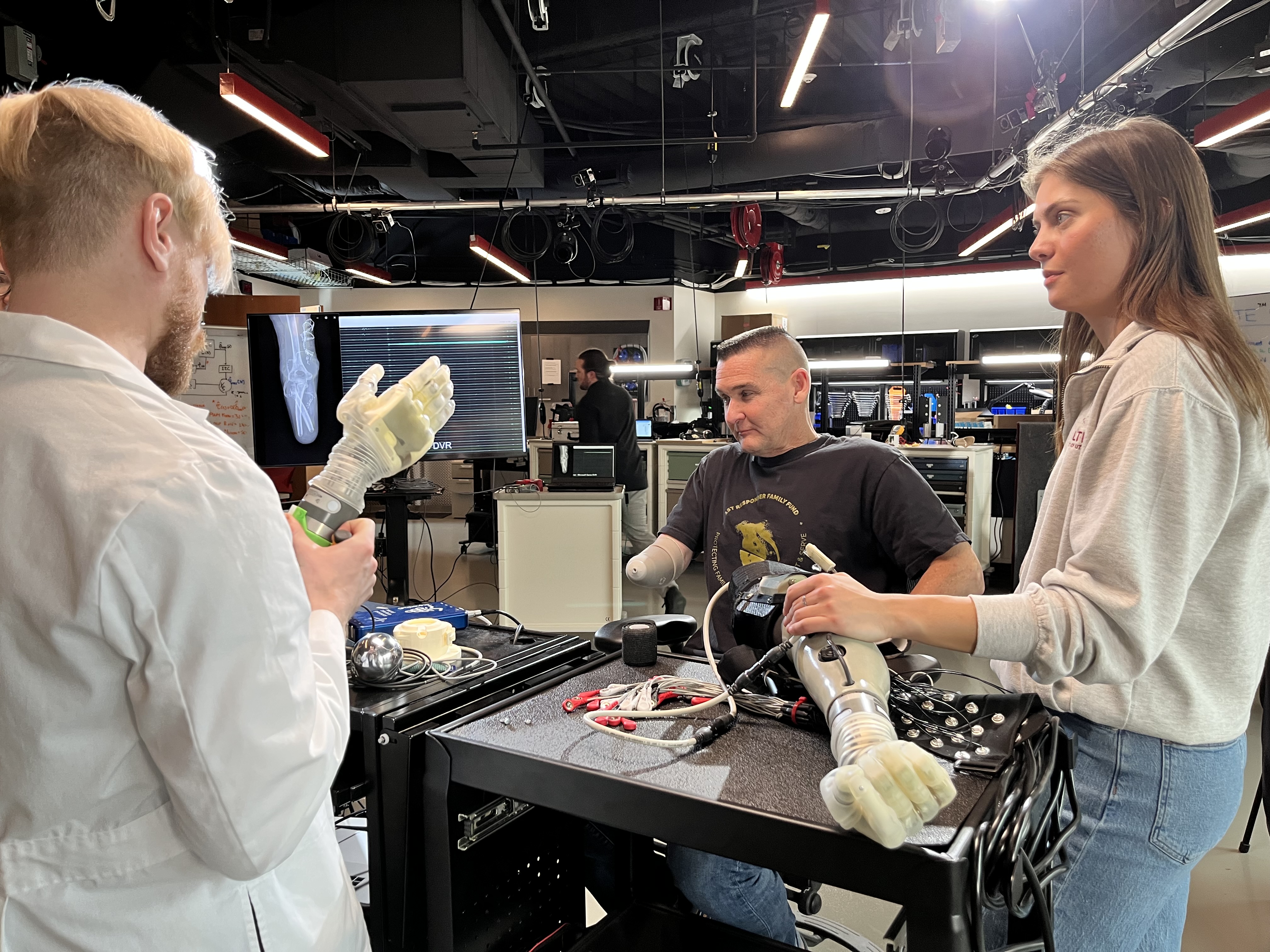
BioUtah recently toured the groundbreaking Biologic Input Output Systems (BIOS) Lab at the Craig H. Neilsen Rehabilitation Hospital—where cutting-edge neurotechnology, AI, and robotics converge. With innovations like the LUKE Arm, BIOS and the University of Utah’s NeuroRobotics Lab are redefining what’s possible in prosthetic mobility and sensory feedback. Joined by key partners and policymakers, this visit highlighted Utah’s leadership in life-changing medical innovation.

In a recent Financial Times article, the LUKE Arm and other AI-powered prosthetics were spotlighted as groundbreaking yet financially out of reach for many amputees. At the NeuroRobotics Lab, we recognize this challenge—and are committed to driving down costs while pushing the boundaries of human–machine integration. Our work isn’t just about innovation—it’s about ensuring life-changing technology becomes truly life-accessible.
Hoodline magazine highlights how the LUKE Arm took center stage at one of the biggest sporting events of the year. With its groundbreaking prosthetic technology, the LUKE Arm is pushing the boundaries of what’s possible, bringing a once sci-fi concept into real-world use.