The Endless Frontier: A New Documentary on the Future of American Science

A new feature-length documentary, The Endless Frontier, premieres this summer, and we’re proud to share that researchers from the University of Utah are featured alongside scientists from Princeton and UCLA.

Directed by Emmy and Peabody winner Marilyn Ness, the film is a collaboration with Consequential Film and the Aspen Institute. It follows three scientists working on some of the most urgent challenges of our time, from human health to the climate crisis, and asks a difficult question: what happens to American science, and to the rest of us, when the people doing this work are pushed out of it?

From the film team:

“THE ENDLESS FRONTIER immerses us in the lives of three passionate scientists, each dedicating their lives to researching solutions to some of the world’s biggest challenges. Today is a dangerous time for science, with recent funding cuts threatening the future of scientific research in the US. This new documentary exposes the realities of the American scientific research system, and the ways scientists are pushing back to improve life for the rest of us. What are the stakes if these scientists are pushed to leave their fields? What potential cures and discoveries leave with them?”

Upcoming Premieres

The film will have its world premiere at the DC/DOX Film Festival in Washington, DC on June 12, followed by a New York premiere at the New York Academy of Medicine on Monday, June 15. A local Utah screening is also in the works, and we’ll share details as soon as a date is confirmed.

Tickets are available now:

The premiere was recently announced in Deadline.

Stay Connected

The film team will soon be sharing information about how communities across the country can host their own screenings. To follow along, visit endlessfrontierfilm.com or follow @endlessfrontierfilm on Instagram.

At a moment when public support for science matters more than ever, The Endless Frontier offers a rare, human look at the people behind the research, and we hope you’ll join us in supporting it.

NeuroRobotics Lab Partners with Meta to Advance Accessible Wearable Technology for People with Limited Hand Mobility

The Utah NeuroRobotics Lab, led by Dr. Jacob A. George, has launched a new research collaboration with Meta to evaluate how consumer-grade wrist wearables can make human-computer interaction more accessible for people with varying levels of hand mobility. Building on previous research that demonstrated how surface electromyography (EMG) signals remain viable for control even with reduced signal-to-noise ratios, Dr. George’s team will now assess Meta Neural Band technology with end users who have neuromuscular conditions. The research will examine how EMG-based gesture controls can enable individuals to operate computers, smart home devices, and potentially recreational mobility equipment like the University of Utah’s TetraSki. This collaboration emphasizes co-design with end users to ensure the technology meets diverse needs and can be customized for people with conditions such as muscular dystrophy, stroke, spinal cord injury, ALS, and limb loss.

Learn More: Read the full article on Meta’s blog: A Look at the University of Utah’s Accessibility Research Using Meta Neural Band

BioHive Features BIOS–U of U Collaboration on Bionic Sensation

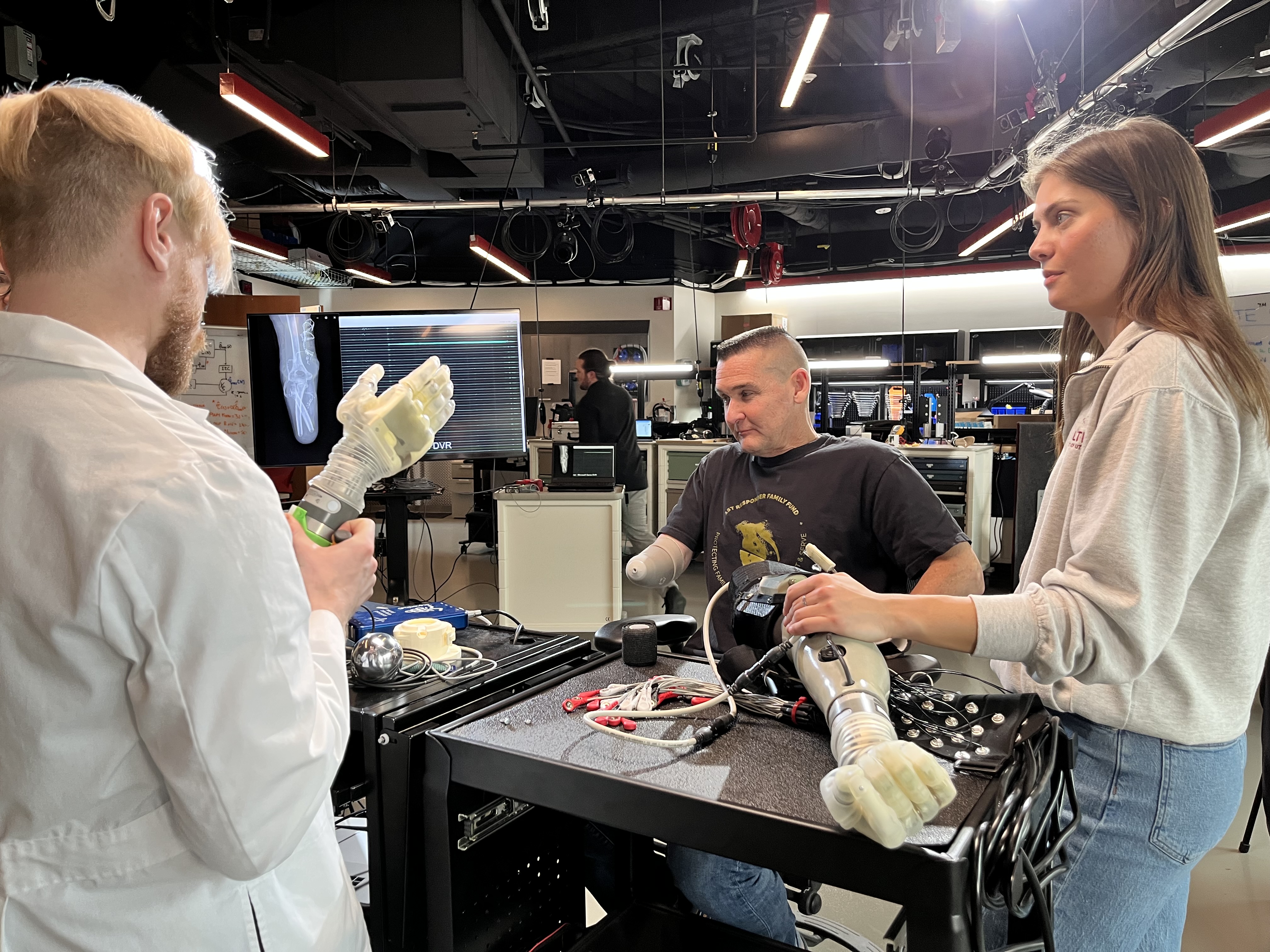
BioHive recently highlighted Jacob A. George, Chief Scientist at Biologic Input Output Systems (BIOS), discussing how their Universal Neural Interface is helping people with limb loss regain both movement and real, emotional sensation—often for the first time in decades. In a recent LinkedIn post featuring a video interview, BioHive showcases how BIOS is working with the University of Utah and the NeuroRobotics Lab to engineer advanced prosthetic limbs that reconnect patients with the world around them.

AI & Bionics: Utah NeuroRobotics Lab Featured in U of U AI Story

The University of Utah’s Office of Artificial Intelligence recently highlighted the Utah NeuroRobotics Lab for its groundbreaking work using AI to design bionic devices that restore movement and sensation for people with neuromuscular impairments. Led by Solzbacher-Chen Endowed Professor Jacob A. George, the lab bridges engineering, medicine, and advanced AI to create prosthetic and assistive technologies that improve independence and quality of life. Read the full feature here.

Inside the Future of Neurotech: Touring the BIOS Lab at the University of Utah

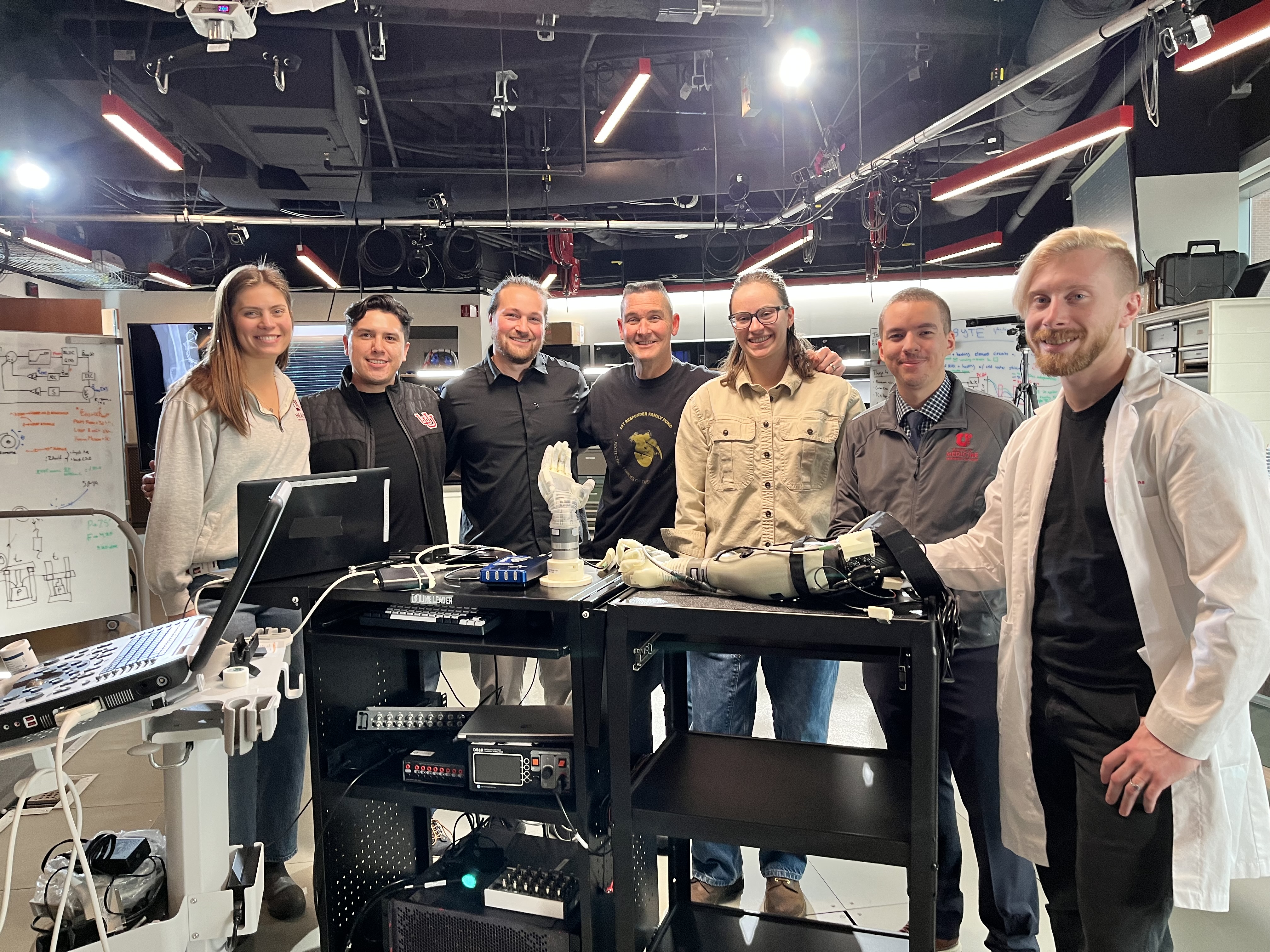
BioUtah recently toured the groundbreaking Biologic Input Output Systems (BIOS) Lab at the Craig H. Neilsen Rehabilitation Hospital—where cutting-edge neurotechnology, AI, and robotics converge. With innovations like the LUKE Arm, BIOS and the University of Utah’s NeuroRobotics Lab are redefining what’s possible in prosthetic mobility and sensory feedback. Joined by key partners and policymakers, this visit highlighted Utah’s leadership in life-changing medical innovation.

Linkedin Post


Closing the Gap: Making Advanced Neuroprosthetics Accessible to All

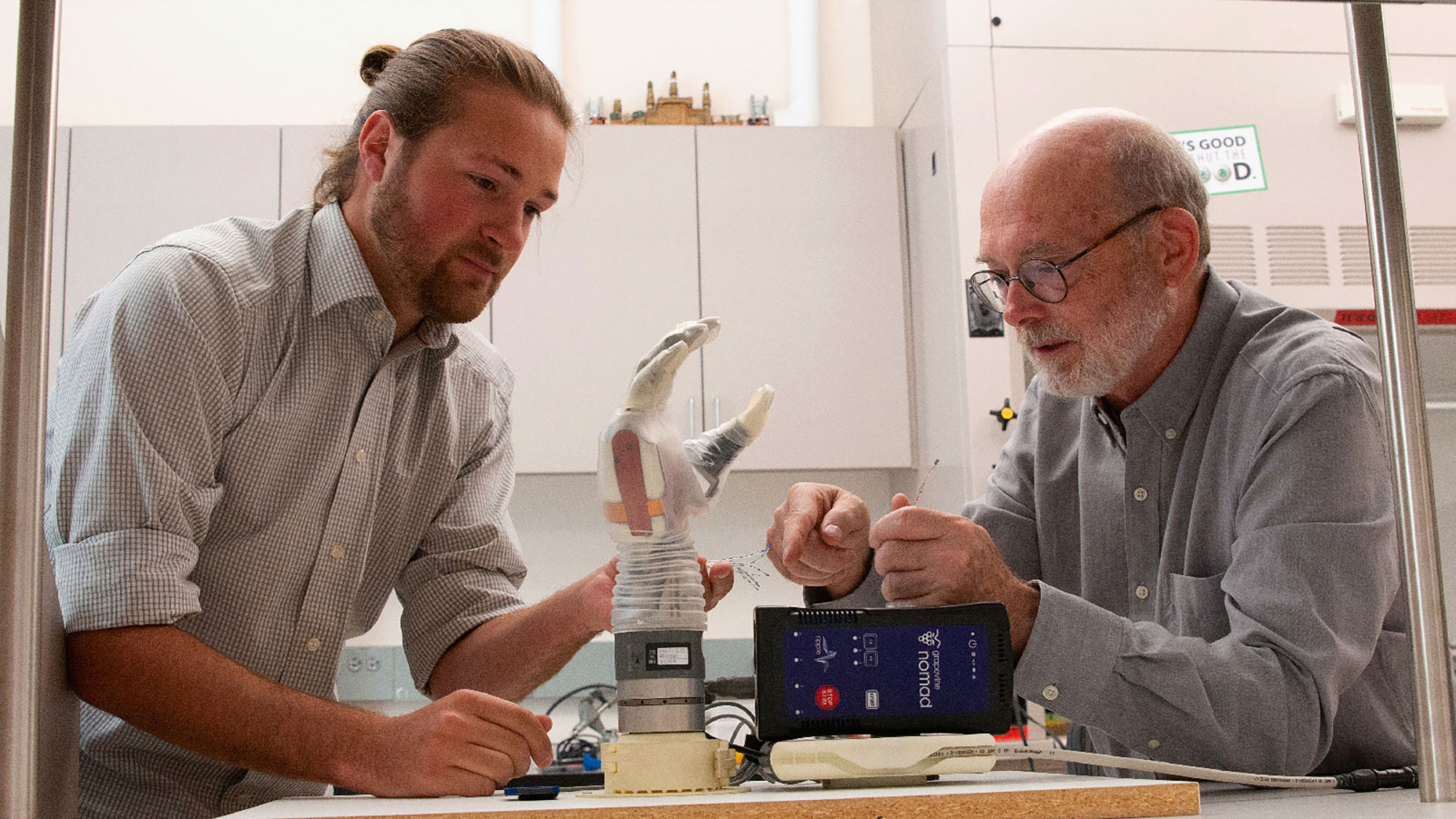
In a recent Financial Times article, the LUKE Arm and other AI-powered prosthetics were spotlighted as groundbreaking yet financially out of reach for many amputees. At the NeuroRobotics Lab, we recognize this challenge—and are committed to driving down costs while pushing the boundaries of human–machine integration. Our work isn’t just about innovation—it’s about ensuring life-changing technology becomes truly life-accessible.

Financial Times Article
Linkedin Post

Sci-Fi Tech Helping Veterans: University of Utah’s LUKE Arm on Fox 13

Fox 13 explores how the LUKE Arm, developed at the University of Utah, is transforming the lives of veterans. This segment delves into the real-world impact of the bionic prosthetic, emphasizing how cutting-edge research is making a tangible difference for those who need it most.

https://www.fox13now.com/news/local-news/how-the-university-of-utah-is-using-sci-fi-technology-to-help-veterans


Sci-Fi Becomes Reality: LUKE Arm Showcased at the Big Game

Hoodline magazine highlights how the LUKE Arm took center stage at one of the biggest sporting events of the year. With its groundbreaking prosthetic technology, the LUKE Arm is pushing the boundaries of what’s possible, bringing a once sci-fi concept into real-world use.

https://hoodline.com/2025/02/sci-fi-turned-reality-university-of-utah-s-luke-arm-steals-spotlight-at-big-game-with-revolutionary-prosthetic-tech/