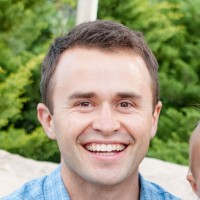
Welcome to Monika, Tara and Carlee

Today we officially welcome Monika Buczak, Princess (Tara) Zamani and Carlee Hardy to the lab.

  • Monika is pursuing her Ph.D. in Biomedical Engineering and will be leading the development of new measures of hand dexterity and thought-based control of adaptive sports technology.
  • Tara is pursuing her M.S. project in Electrical & Computer Engineering and will be working to develop novel neural features for estimating motor intent from implanted peripheral nerve interfaces.
  • Carlee is pursuing her B.S. in Biomedical Engineering and will be exploring how we can modify fingertip grip to improve dexterity.

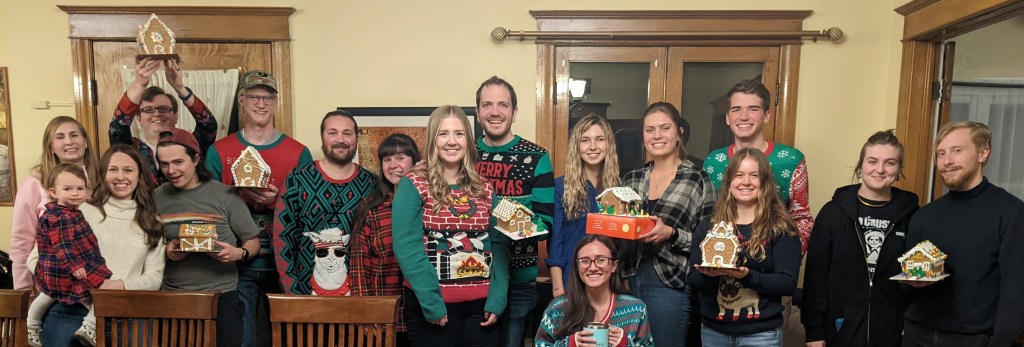
The Utah NeuroRobotics lab is excited to officially have these three join our team, and we look forward to seeing their exciting projects develop!
Troy and Caleb pass the BME qualifying exam!

Congratulations to Troy Tully and Caleb Thomson for passing the biomedical engineering qualifying exam in neural engineering! As a part of the BME PhD program, students must demonstrate expertise of the subject matter within their track specialization (e.g., neural engineering). After completing the relevant coursework, they meet this requirement by passing an extensive 8-hour written qualifying exam. This is a long and grueling exam, but fortunately it is also typically the last written exam PhD students will ever take. After passing the exam, students who have completed their coursework are eligible to receive a milestone MS degree!

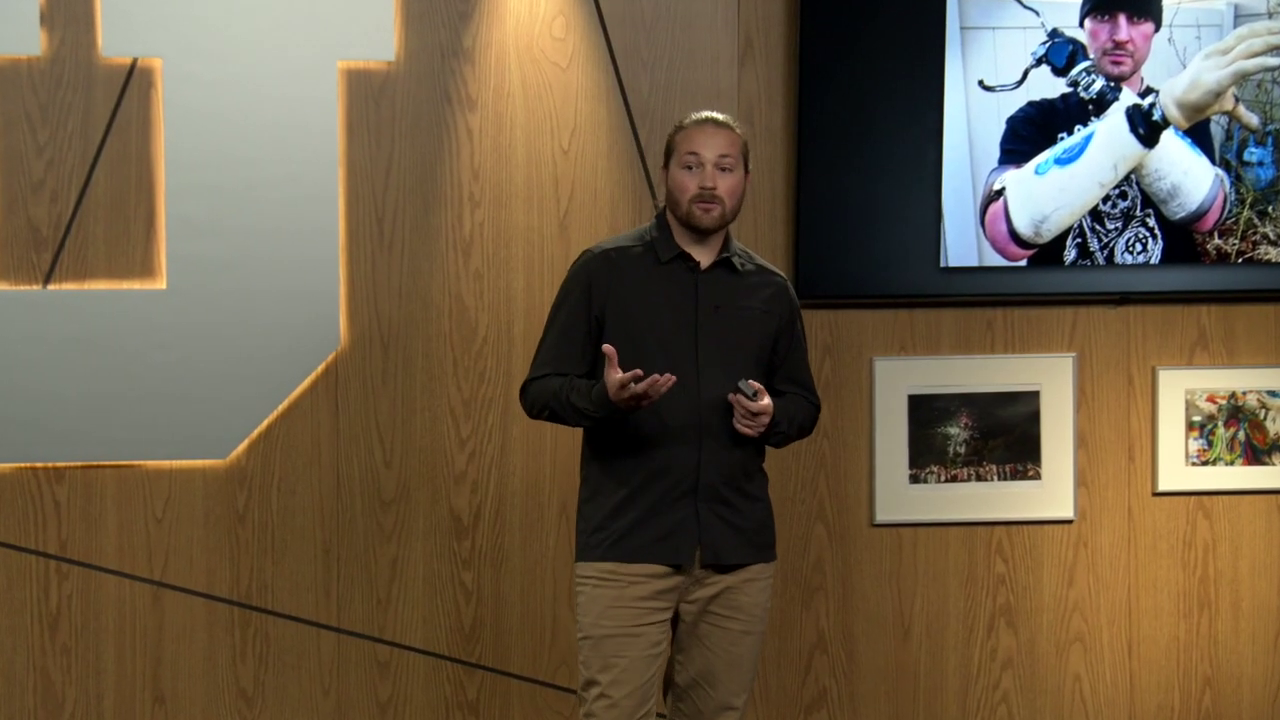
Dr. George featured in TED-style talk to U-Health donors

In 2019, Dr. George and fellow researchers at the U made waves with the "LUKE Arm" (named after the robotic hand given to Luke Skywalker in The Empire Strikes Back), a prosthetic arm that has the ability to feel objects by transmitting the appropriate signals to the brain. Not only can the arm feel, but it can be controlled by the user's thoughts. In this 2021 TED-style talk, Dr. George talks about the advances that have taken place since the their breakthrough was first announced.

Three Additional Undergraduate Fellowships!

Congratulations to Abby, Jared and Rebecca for being awarded undergraduate research fellowships for Spring 2022! Their award-winning research projects are listed below:

  • Abby Harrison: Discriminability of Transcutaneous Sensory Feedback
  • Jared Zollinger: Surface-Electromyography Integrated Low-Cost Control System for Dexterous Bionic Arms
  • Rebecca Urban: Discriminability of Electrocutaneous Sensory Feedback

These prestigious research fellowships are awarded through the University of Utah's Office of Undergraduate Research. Congratulations to these super-star undergraduates!

Dr. George Featured in Forbes 30 Under 30

Dr. Jacob A. George, director of the Utah NeuroRobotics Lab, was named one of Forbes’ “30 Under 30” in the Science category for 2022. For 10 years, the finance magazine has named 30 young innovators, entertainers and others each in a variety of categories from art and design to games, media and sports. These are considered by the editors to be the ones to watch out for in their respective fields. Past honorees have included Facebook founder Mark Zuckerberg, singer and entrepreneur Rihanna, and the co-founders of such companies as Instagram, Dropbox and Pinterest. Click here to see the list of the 2022 honorees in the Science category.

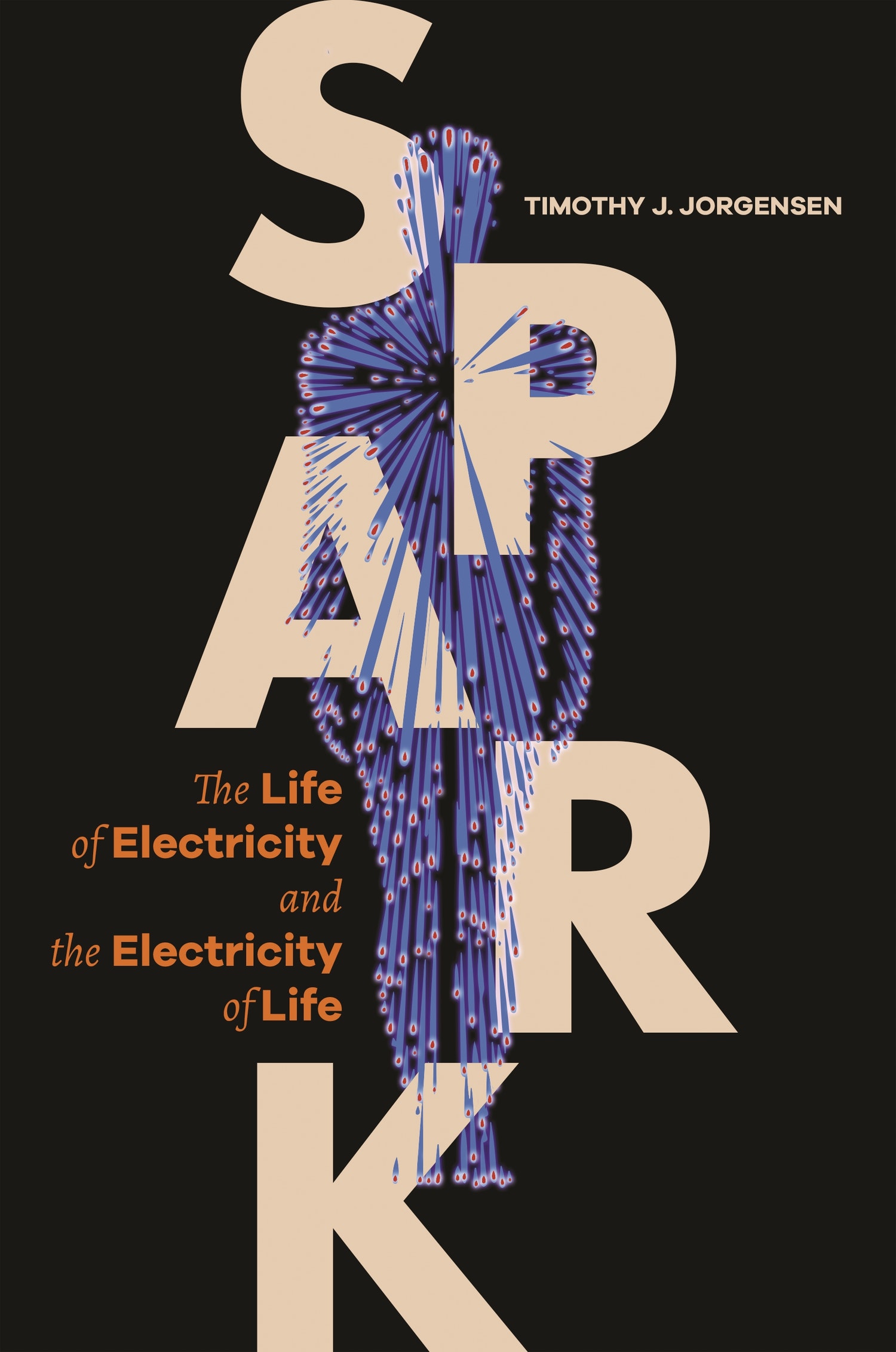
Research Featured in New Book: “Spark”

When we think of electricity, we likely imagine the energy humming inside our home appliances or lighting up our electronic devices—or perhaps we envision the lightning-streaked clouds of a stormy sky. But electricity is more than an external source of power, heat, or illumination. Life at its essence is nothing if not electrical.

The story of how we came to understand electricity’s essential role in all life is rooted in our observations of its influences on the body—influences governed by the body’s central nervous system. Spark explains the science of electricity from this fresh, biological perspective. Through vivid tales of scientists and individuals—from Benjamin Franklin to Elon Musk—Timothy Jorgensen shows how our views of electricity and the nervous system evolved in tandem, and how progress in one area enabled advancements in the other. He explains how these developments have allowed us to understand—and replicate—the ways electricity enables the body’s essential functions of sight, hearing, touch, and movement itself.

Throughout, Jorgensen examines our fascination with electricity and how it can help or harm us. He explores a broad range of topics and events, including the Nobel Prize–winning discoveries of the electron and neuron, the history of experimentation involving electricity’s effects on the body, and recent breakthroughs in the use of electricity to treat disease. A key chapter in the book features work from the Utah NeuroRobotics Lab, where our team electrically linked a bionic arm with the human nervous system to create dexterous prostheses controlled by thought and endowed with a sense of touch.

Filled with gripping adventures in scientific exploration, Spark offers an indispensable look at electricity, how it works, and how it animates our lives from within and without. Get a copy of book today!

Utah NeuroRobotics Lab at Engineering Day

Hundreds of high school students from Utah and around the country got a taste of how exciting engineering can be during the annual “Engineering Day” event, the first time it was held in person in two years. The one-day activity held Saturday, Nov. 13, in the Warnock Engineering Building is the largest outreach event put on by the University of Utah’s College of Engineering. More than 700 students and their parents attended this year’s Engineering Day, which includes fun demonstrations and presentations by faculty from the college. The Utah NeuroRobotics Lab showcased our amazing technology, including through-controlled bionic arms, exoskeletons, self-aware prostheses, non-invasive stimulation for sensory feedback or hand reanimation, wearable sensors, and AI-driven diagnostics.

New Manuscript on Robust Thought-Controlled Exoskeletons

Our work on robust thought-controlled exoskeletons in collaboration with the Utah Bionic Engineering Lab is now published online in Frontiers in NeuroRoboticsWe explored how a powered hip exoskeleton impacts muscle activity, and the implications of that on real-time EMG control. We showed that lower-limb and lower-back muscle activity change non-linearly as a result of increasing exoskeleton assistance - this makes real-time EMG control difficult because the act of controlling (assisting) changes the input signal. The good news is that nonlinear neural networks are capable of generalizing predictions of torque across different levels of exoskeleton assistance, when explicit training data is provided. However, a common linear model (i.e., a Kalman filter) is not capable of the same generalization. Lastly, given that explicit training data on every level of exoskeleton assistance may not be feasible, we show that, when time is limited, training data for EMG control of exoskeletons should use at least 35 gait cycles and emphasize the highest levels of assistance first! The full article is available open-access here: https://doi.org/10.3389/fnbot.2021.700823

Michael Paskett Is Joining Facebook Reality Labs!

Congratulations to Michael Paskett for transitioning to an exciting new job at Facebook Reality Labs! He will be working on the development of a wrist-based neural interface to intuitively control augmented and virtual realities. Michael will be defending his dissertation in PhD student in Biomedical Engineering this semester. As a member of Center for Neural Interfaces, Michael played in integral role in developing various technologies currently being utilized in our NeuroRobotics Lab. Three notable contributions we now use regularly are: 1) a bypass socket that allows healthy individuals to control and test myoelectric prostheses, 2) a method for quantifying cognitive load associated with prosthetic control & feedback strategies, and 3) an integrated device for vibrotactile feedback of robotic devices. Michaels new role at Facebook Reality Labs is timely; the Utah NeuroRobotics Lab recently received a $150,000 grant from Facebook Reality Labs to ensure neural interfaces for controlling virtual and augmented reality are inclusive to all users.